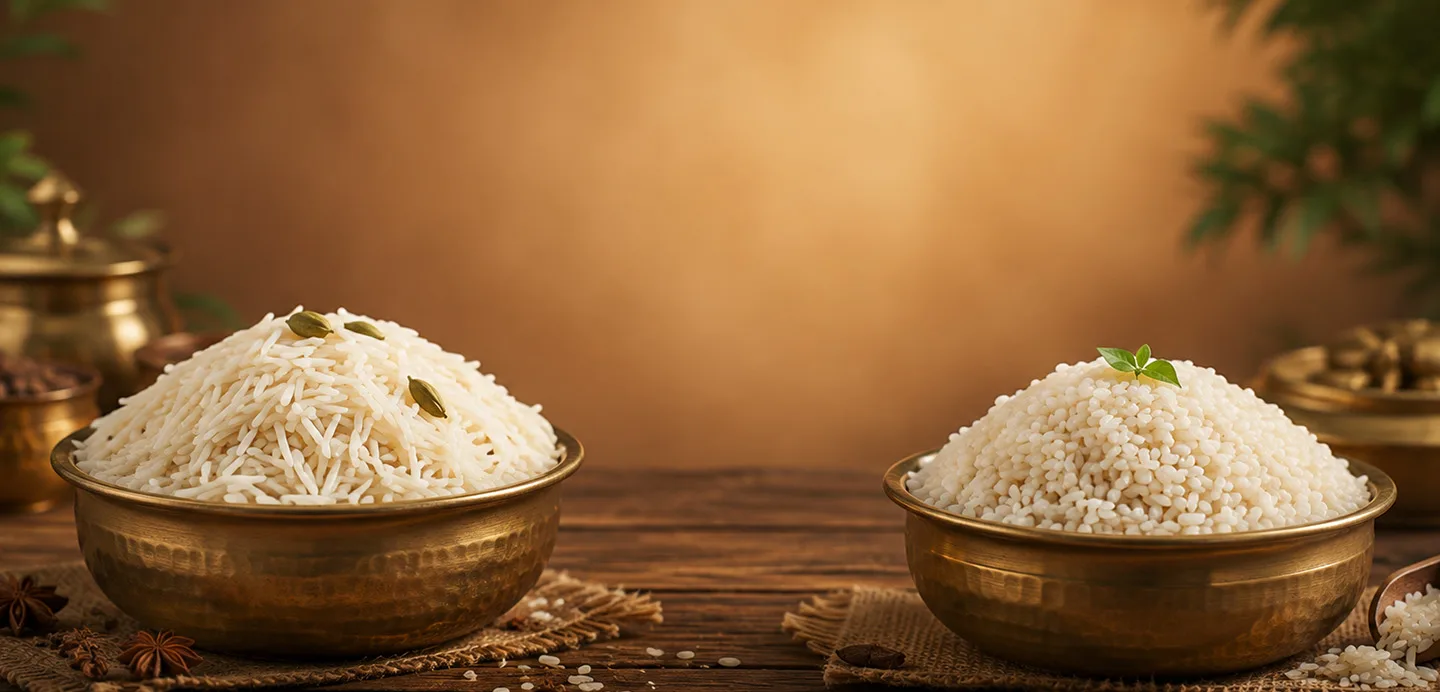
Quick answer: Basmati rice is a long-grain, highly aromatic rice best known for biryanis and pulaos across India. Jeerakashala rice is a small-grain, naturally fragrant variety from Kerala, traditionally used in Malabar biryani. Both are aromatic, but they differ in grain size, texture, and regional origin.
What Makes Basmati Rice Different?
Basmati is prized for its extra-long grains that elongate further on cooking, along with a distinct aroma and fluffy, non-sticky texture. Royal Chef’s Basmati Rice is sourced and processed to retain these qualities, making it suited for dishes where texture and presentation matter, like biryani, pulao, and jeera rice.
What Makes Jeerakashala Rice Different?
Jeerakashala, sometimes called Kaima rice, is a short, slender-grain rice grown mainly in Kerala’s Wayanad region. Its name comes from its resemblance in shape and aroma to jeera (cumin) seeds. Unlike Basmati, it does not elongate much when cooked, but it has a naturally nutty aroma and a slightly sticky texture that binds well with spices and gravies — which is exactly why it is the traditional rice of choice for authentic Malabar biryani.
Side-by-Side Comparison
| Feature | Basmati Rice | Jeerakashala Rice |
|---|---|---|
| Grain length | Extra-long | Short and slender |
| Aroma | Strong, floral | Nutty, mild |
| Texture after cooking | Fluffy, separate grains | Slightly sticky, soft |
| Best used for | Pulao, North Indian biryani, jeera rice | Malabar biryani, Kerala dishes |
| Region of origin | Punjab, Haryana | Wayanad, Kerala |
Which One Should You Choose?
- Choose Basmati if you are making North Indian-style biryani, pulao, or fried rice where long, separate grains matter.
- Choose Jeerakashala if you are making Malabar or Thalassery biryani, where a softer, aromatic short grain is traditional and essential to the authentic taste.
Many home cooks in Kerala keep both on hand — Jeerakashala for biryani, and Basmati for other rice dishes.
Frequently Asked Questions
Is Jeerakashala rice the same as Basmati?
No. They are different rice varieties. Jeerakashala has short, slender grains and a nutty aroma, while Basmati has long grains and a floral aroma.
Can I substitute Basmati for Jeerakashala in Malabar biryani?
You can, but the texture and taste will differ noticeably from an authentic Malabar biryani, which relies on Jeerakashala’s short grain and unique aroma.
Why is Jeerakashala rice used specifically for Malabar biryani?
Its short grain absorbs the biryani masala and moisture well without turning mushy, and its natural aroma complements the spices used in Malabar-style cooking.
Is Basmati rice good for daily meals?
Yes, though it is typically reserved for special dishes in many households due to its cost and distinct flavour profile compared to everyday rice varieties.
Royal Chef brings you both authentic Basmati Rice and Jeerakashala Rice, sourced to preserve their traditional aroma and texture.


