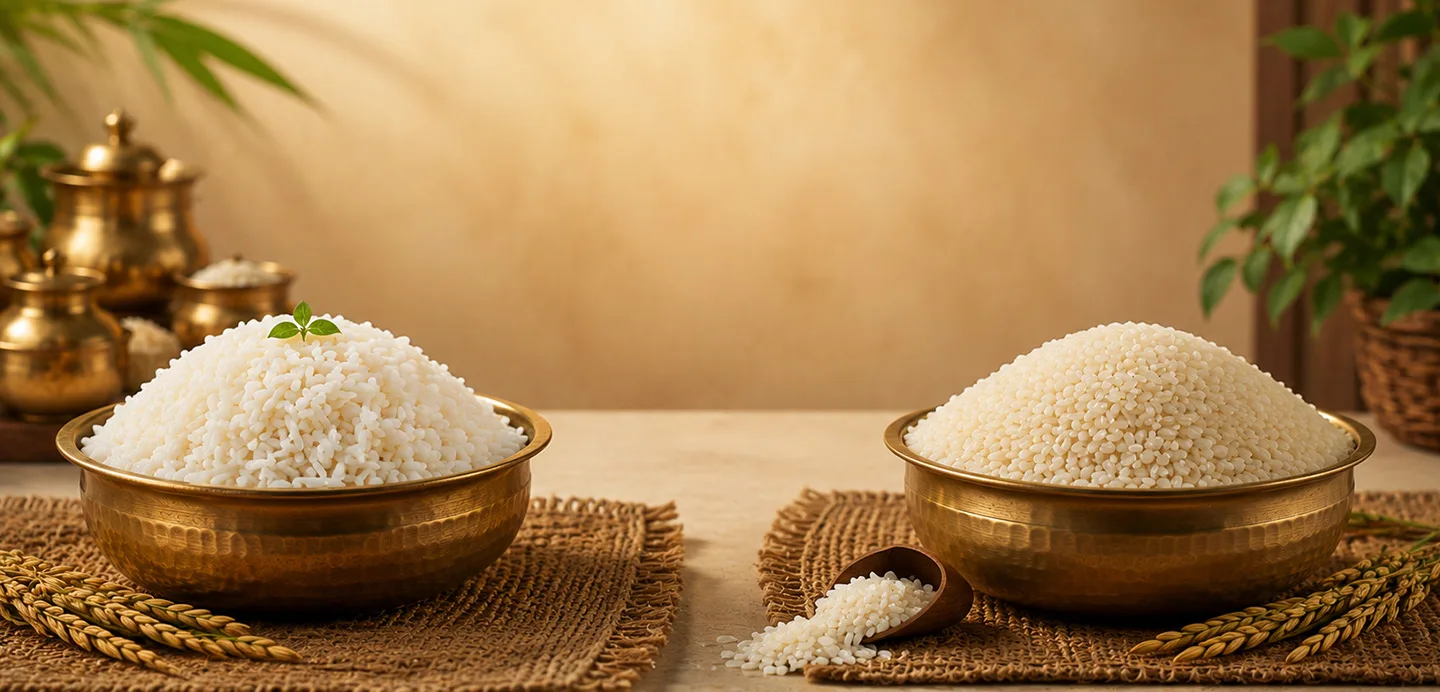
Quick answer: Ponni Boiled Rice is parboiled before milling, giving it a firmer texture, longer shelf stability, and slightly more nutrients. Ponni Raw Rice is milled without parboiling, giving it a softer, stickier texture. Choose boiled for meals that need to hold their shape, and raw for softer, everyday dishes.
What Does "Boiled" Actually Mean?
Boiled rice does not mean the rice is pre-cooked. It refers to parboiling — a process where paddy is soaked, steamed, and dried before milling. This process:
- Pushes nutrients from the outer husk into the grain
- Makes the grain firmer and less prone to breaking
- Gives the rice a slightly golden tint before cooking
Royal Chef’s Thanjavur Ponni Boiled Rice goes through this traditional process to deliver consistent quality and texture in every batch.
What About Raw Rice?
Raw rice, also called white rice in some regions, is milled directly from paddy without parboiling. It results in:
- A softer, more delicate grain
- A slightly stickier texture once cooked
- A quicker cooking time in most cases
Royal Chef’s Thanjavur Ponni Raw Rice is well suited for dishes where a soft, cohesive texture is preferred.
Quick Comparison
| Aspect | Ponni Boiled Rice | Ponni Raw Rice |
|---|---|---|
| Processing | Parboiled, then milled | Milled directly |
| Texture | Firm, separate grains | Soft, slightly sticky |
| Nutrient retention | Higher | Lower |
| Best for | Sambar rice, meal prep, lunch boxes | Curd rice, lemon rice, daily plain rice |
| Shelf life | Slightly longer | Standard |
Which Should You Buy for Your Kitchen?
- If your household eats a lot of sambar rice, rasam rice, or packed lunches, Ponni Boiled Rice holds up better without turning mushy.
- If you prefer soft, everyday rice for curd rice or simple meals, Ponni Raw Rice gives a more comfortable texture.
- Many South Indian households keep both — boiled for lunch dishes, raw for dinner and curd rice.
Frequently Asked Questions
Is boiled rice healthier than raw rice?
Boiled (parboiled) rice generally retains more nutrients because the parboiling process transfers nutrients from the bran into the grain before milling.
Does Ponni Boiled Rice take longer to cook than raw rice?
Yes, slightly. Parboiled rice typically needs a few extra minutes of cooking time or a longer soak compared to raw rice.
Can I use Ponni Boiled Rice for curd rice?
You can, but the texture will be firmer than the traditional soft consistency curd rice is known for. Ponni Raw Rice is better suited for this dish.
Which Ponni rice is better for weight-conscious diets?
Ponni Boiled Rice has a slightly lower glycemic impact than raw rice due to the parboiling process, though portion size and overall diet matter more.
Royal Chef’s Thanjavur Ponni Rice, available in both Boiled and Raw varieties, is sourced from Tamil Nadu’s fertile Cauvery delta.


