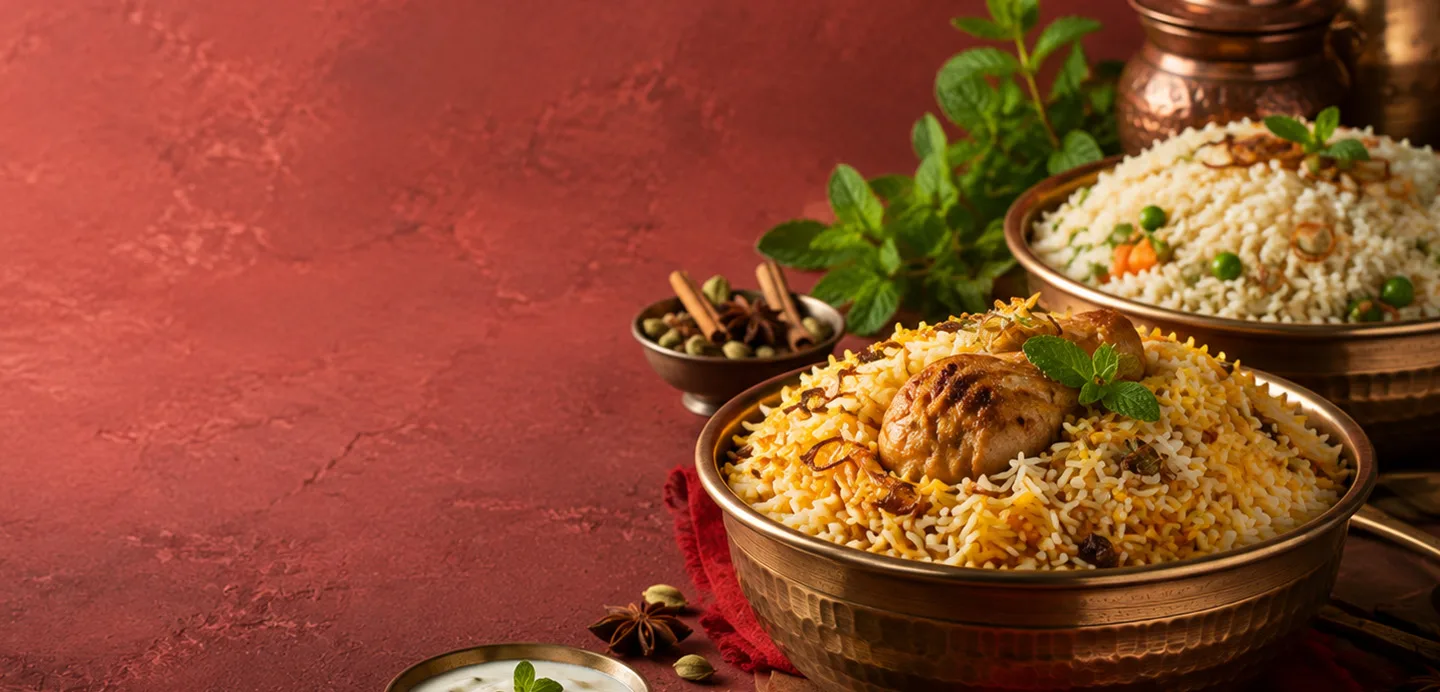
Quick answer: Basmati Rice is the best choice for most biryani and pulao styles due to its long grain and ability to stay separate and fluffy. For Malabar or Thalassery-style biryani, Jeerakashala Rice is the traditional and preferred choice for its short grain and nutty aroma.
Why Grain Type Matters for Biryani
Biryani depends on rice that can absorb spices and moisture without turning mushy or clumping together. This is why long-grain, low-stickiness rice varieties work best. The two top choices in Indian kitchens are Basmati and Jeerakashala — and picking the right one depends on the style of biryani you are making.
Basmati Rice for Biryani and Pulao
Basmati long grains elongate further when cooked, staying separate and fluffy rather than clumping. This makes it the standard choice for:
- North Indian and Hyderabadi-style biryani
- Vegetable and paneer pulao
- Jeera rice and fried rice
Royal Chef’s Basmati Rice is sourced and processed to retain grain length and aroma, both of which matter significantly for biryani presentation and taste.
Jeerakashala Rice for Malabar Biryani
If you are making authentic Malabar or Thalassery biryani, Jeerakashala is the rice traditionally used, not Basmati. Its short, aromatic grains soak up the biryani masala differently, giving the dish its signature texture and flavour. Substituting Basmati here changes the character of the dish noticeably.
Quick Guide by Biryani Style
| Biryani style | Recommended rice |
|---|---|
| Hyderabadi biryani | Basmati |
| Lucknowi / Awadhi biryani | Basmati |
| Malabar biryani | Jeerakashala |
| Thalassery biryani | Jeerakashala |
| Vegetable pulao | Basmati |
Tips for Perfect Biryani Rice
- Rinse rice until the water runs clear to remove excess starch.
- Soak Basmati for 20–30 minutes before cooking; Jeerakashala needs less soaking time.
- Cook rice to about 70–80% doneness before layering for dum biryani, so it finishes cooking in the steam.
- Avoid over-stirring once layered, to keep grains intact.
Frequently Asked Questions
Can I use Ponni rice for biryani?
It is not recommended. Ponni rice lacks the grain length and firmness needed to hold up in a layered, slow-cooked biryani.
Why does Basmati rice smell different from other rice?
Basmati contains a naturally occurring aromatic compound that gives it its distinct fragrance, a trait it is specifically known for compared to other rice varieties.
Is Jeerakashala rice healthier than Basmati?
Both are comparable nutritionally as unfortified white rice varieties. The main differences are in aroma, grain size, and traditional culinary use rather than nutrition.
How much water does Basmati rice need for biryani?
A common ratio is 1:1.5 rice to water for biryani, slightly less than the 1:2 used for regular steamed rice, since the rice is only partially cooked before dum.
Royal Chef’s Basmati and Jeerakashala Rice are sourced to bring authentic texture and aroma to every biryani and pulao.


